
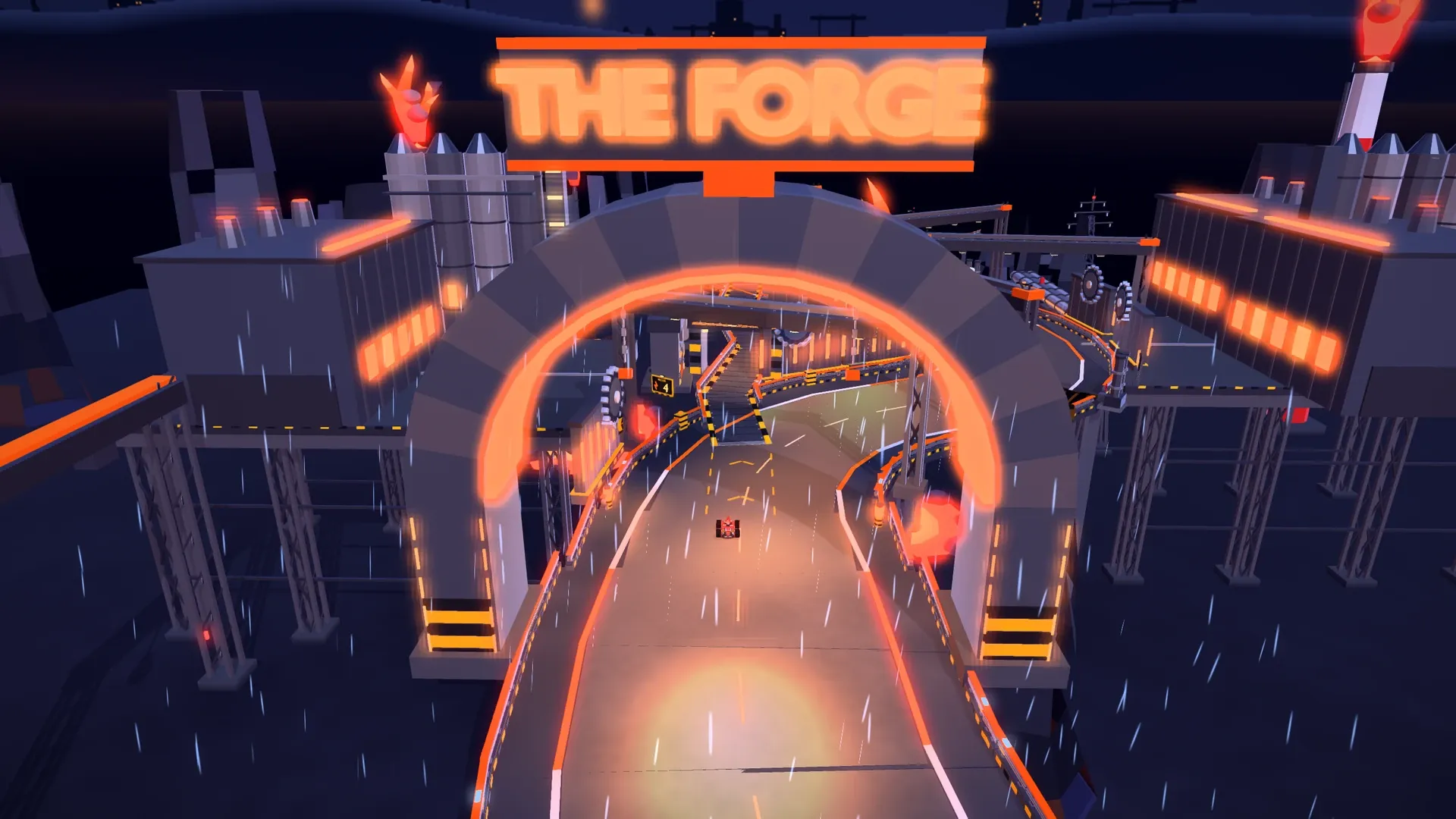
Thunderforge is done, after a few more final passes than I expected. That is becoming a familiar experience with Riff Racers.
There is a point when building a track where all the important pieces are technically there. You can drive a full lap, the shortcuts work, the scenery is in place, and nothing obviously falls apart.
And then you actually drive it a few more times and start noticing all the small things.
On Thunderforge, I found barriers you could drive through, shortcuts that began too abruptly, ramps that looked out of place and a pit lane that did not yet look useful. Those problems needed another pass through the track.
Into the forge
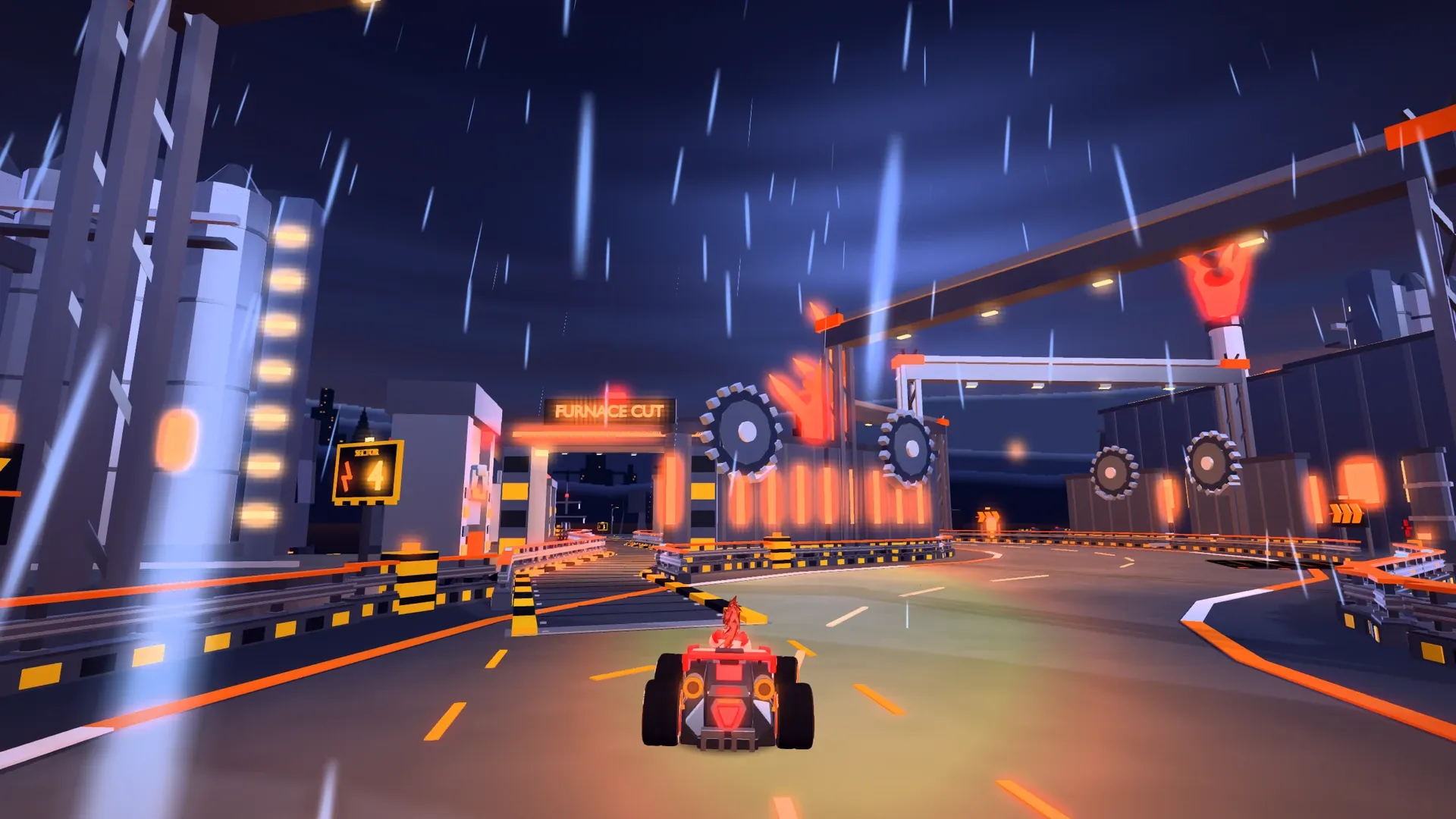
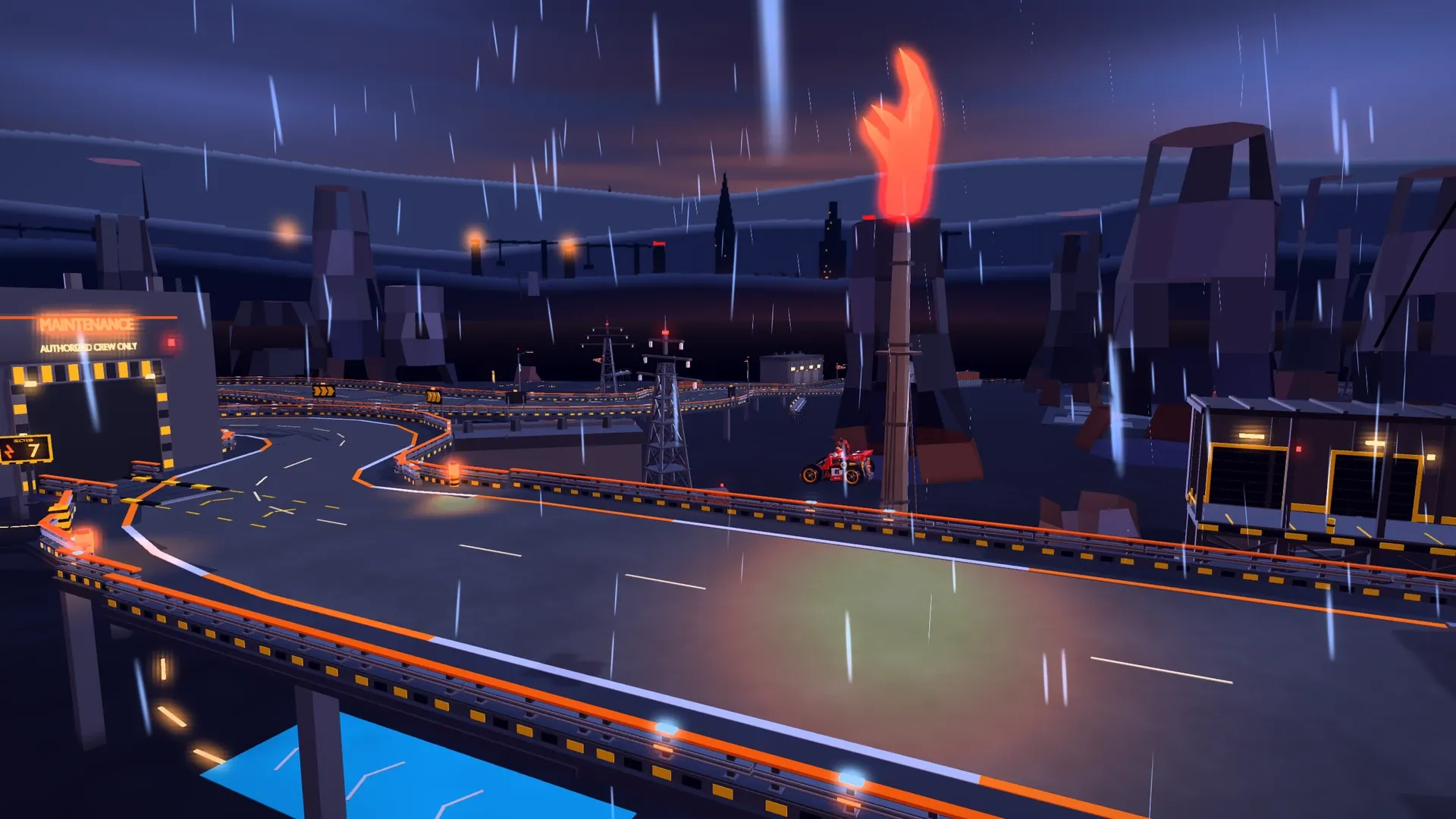
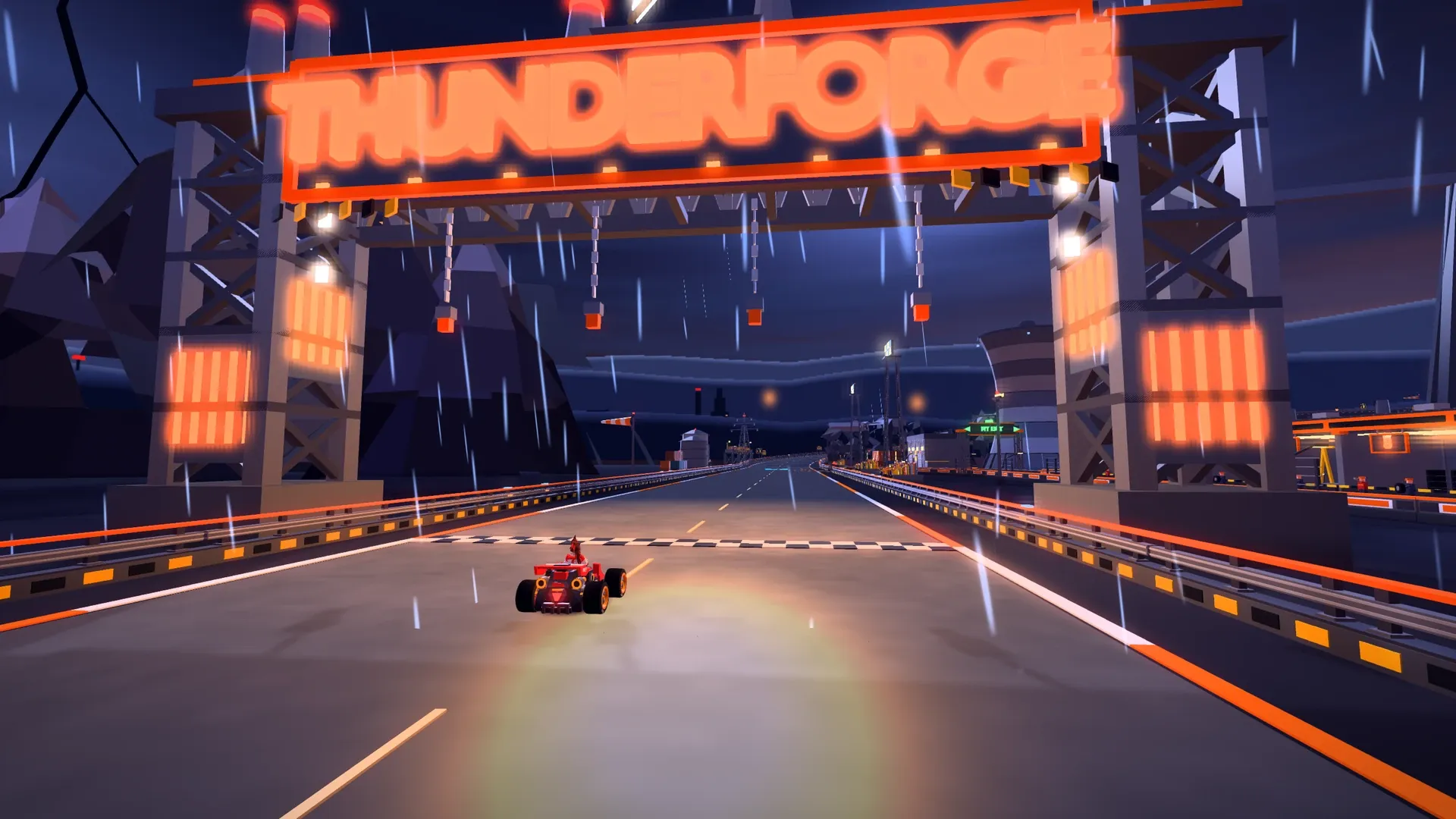
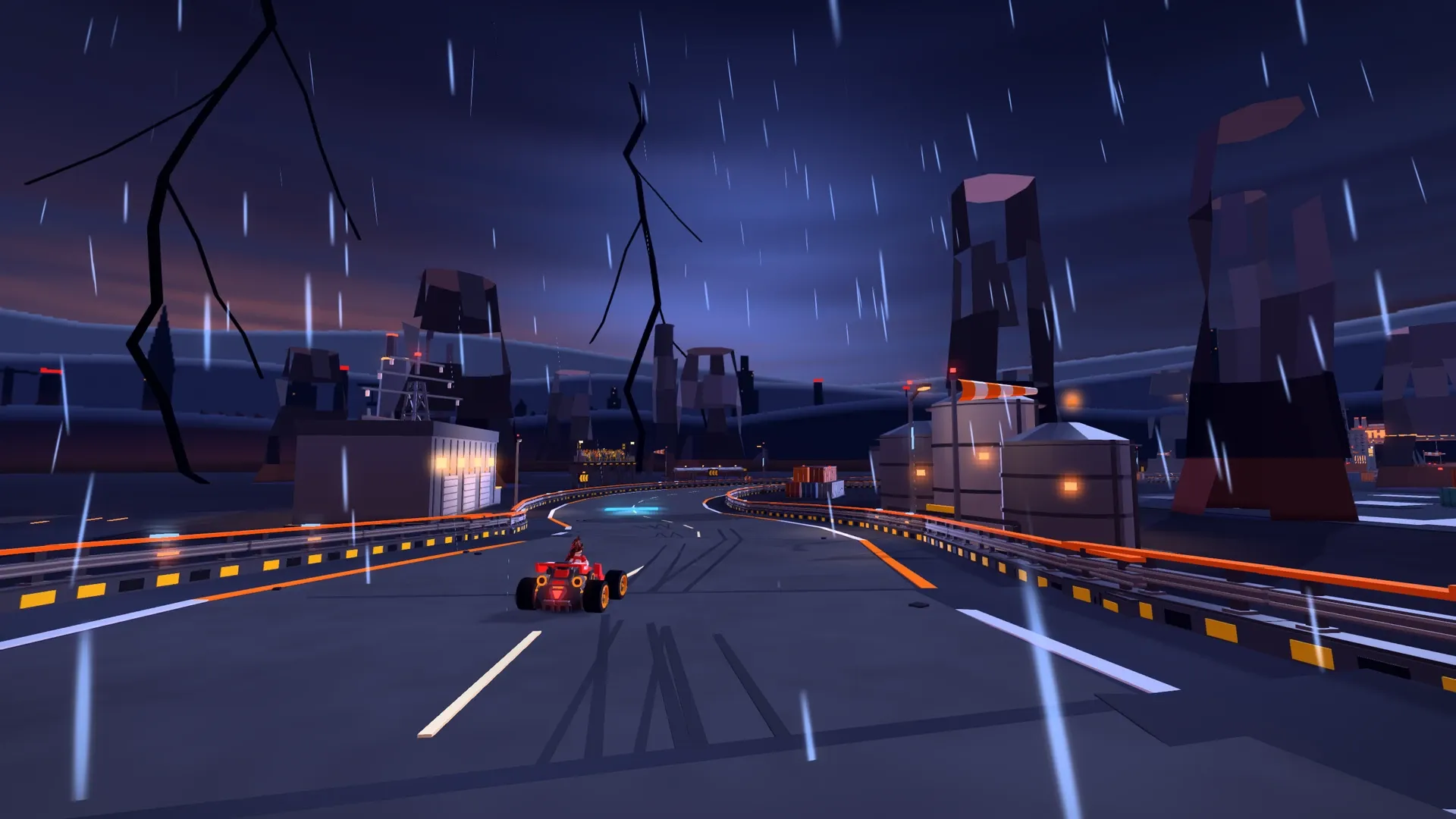
Thunderforge began as a race through a huge industrial mountain forge during a thunderstorm. I pictured dark mountains, wet roads, steel structures, orange furnace light, cold lightning, deep drops and huge machinery.
The important part was making sure it did not just become a dark track with a few glowing orange objects scattered around.
I wanted the place to feel like an actual working industrial complex that happened to have a race track running through it.
That meant thinking a bit more about why things were where they were.
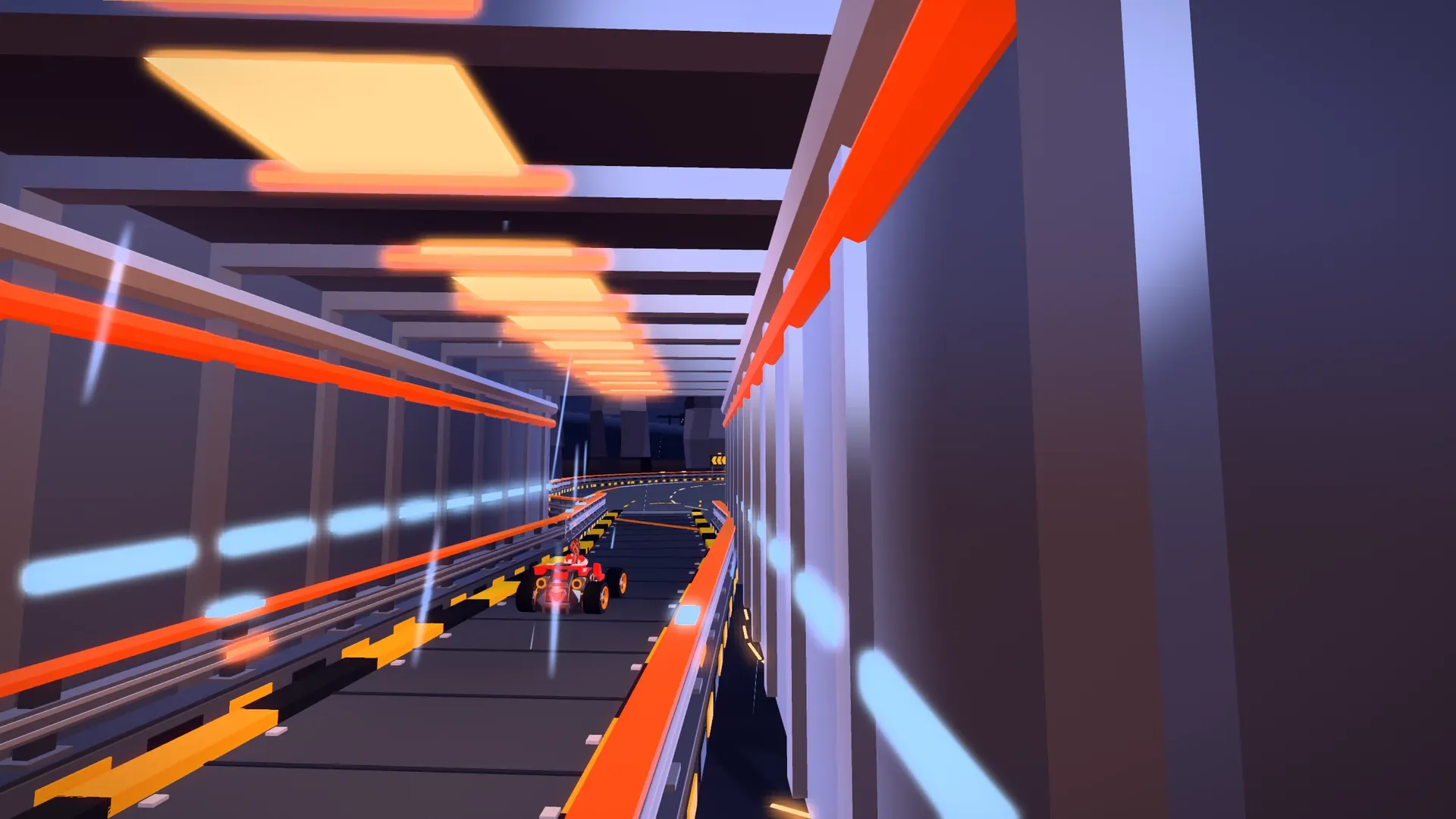
A maintenance tunnel should actually look like a maintenance tunnel.
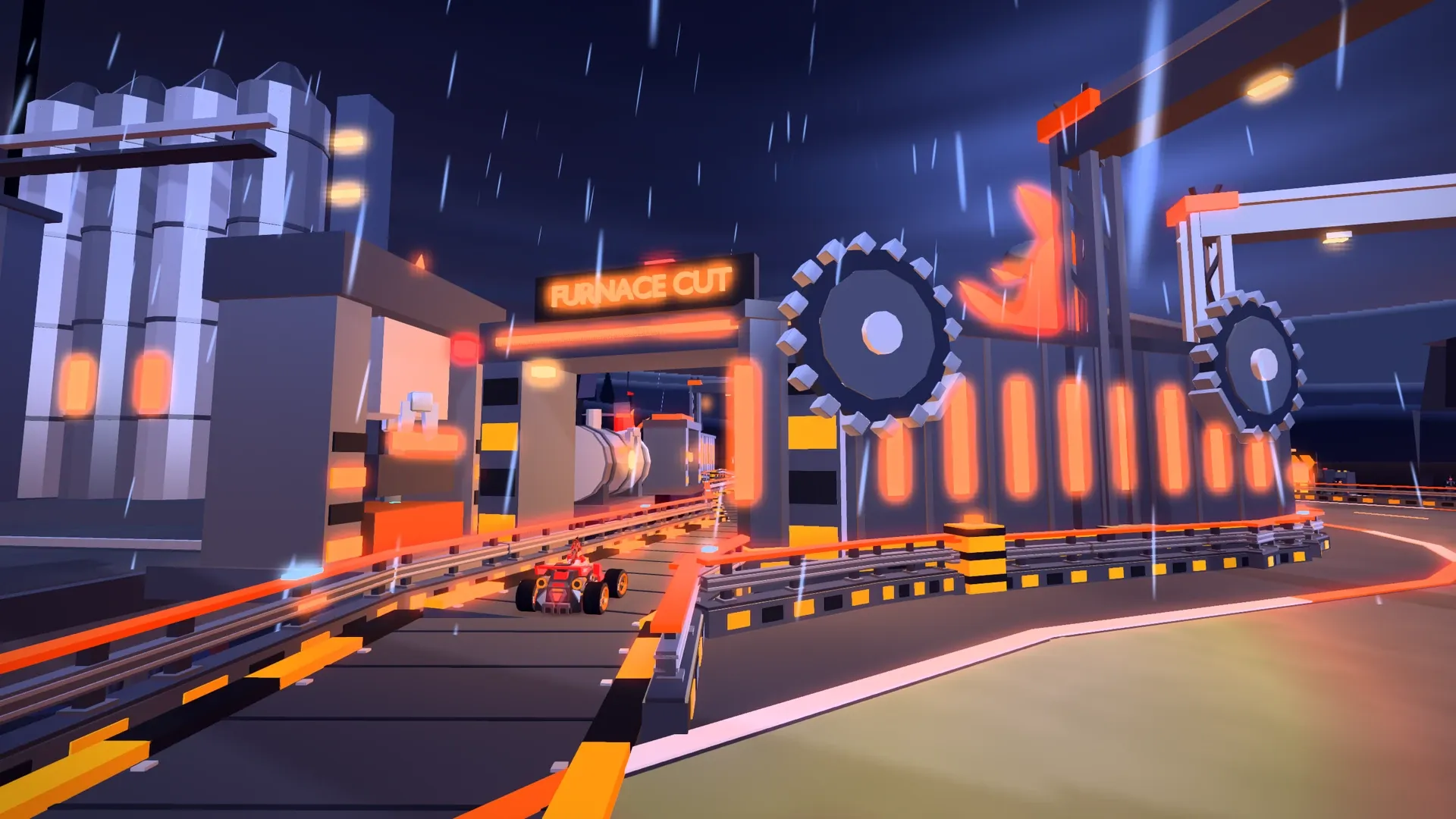
A shortcut should feel like an old service road or transport route.
A jump should look like it came from damaged or repurposed industrial infrastructure rather than a random ramp sitting in the middle of the road.
Those little decisions made a much bigger difference than I expected.
The track needed to flow better
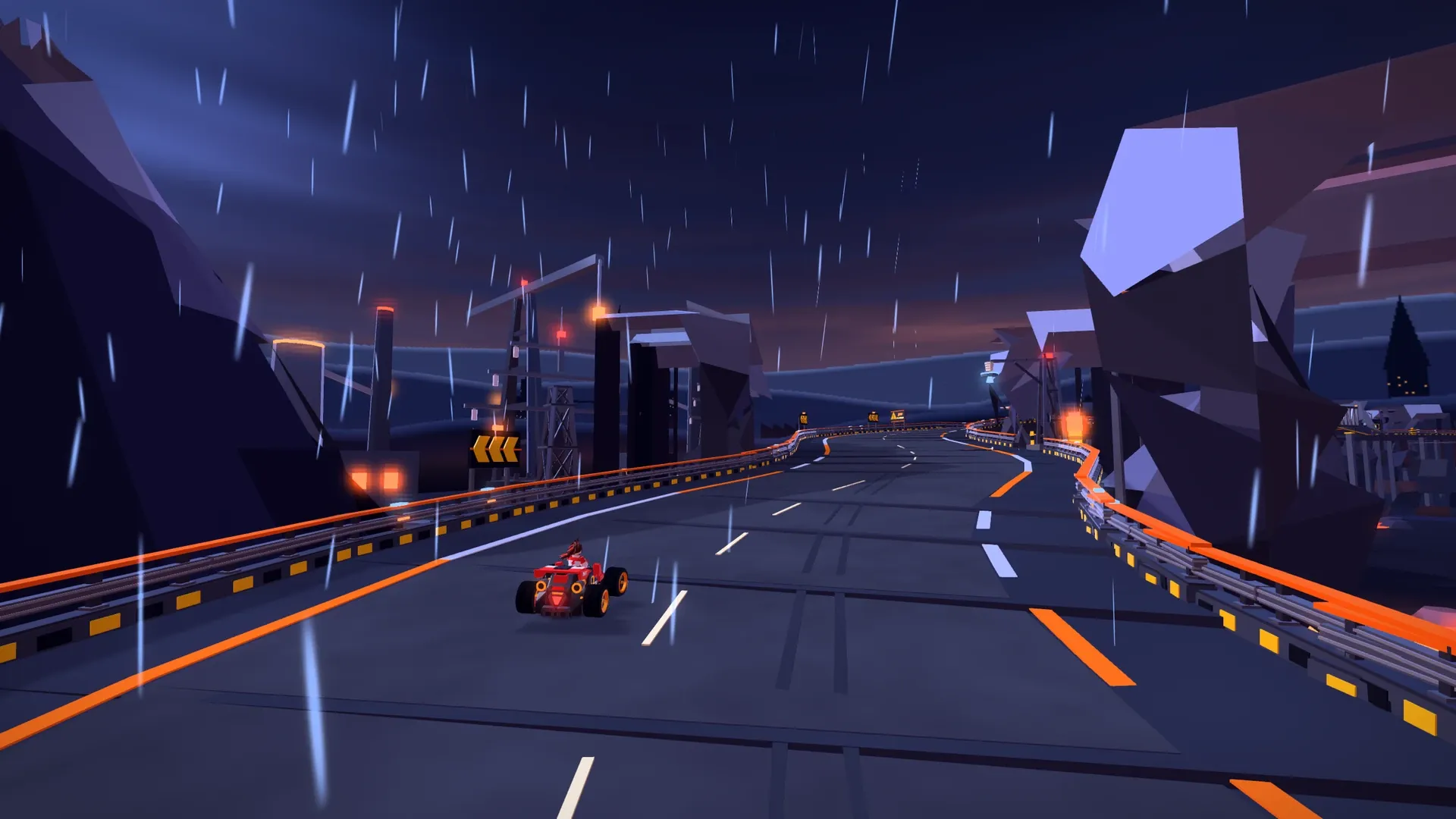
One of the things I spent quite a bit of time on was the way alternate routes connect to the main track.
Earlier versions had a few places where shortcuts or jumps started too abruptly.
They worked mechanically, but visually you could immediately tell that they had been added later.
So I went back and rebuilt those transitions.
The road now splits before each shortcut, giving the player time to choose a line. Each alternate route has an entrance and a proper merge back into the main road.
The same happened with the major jumps.
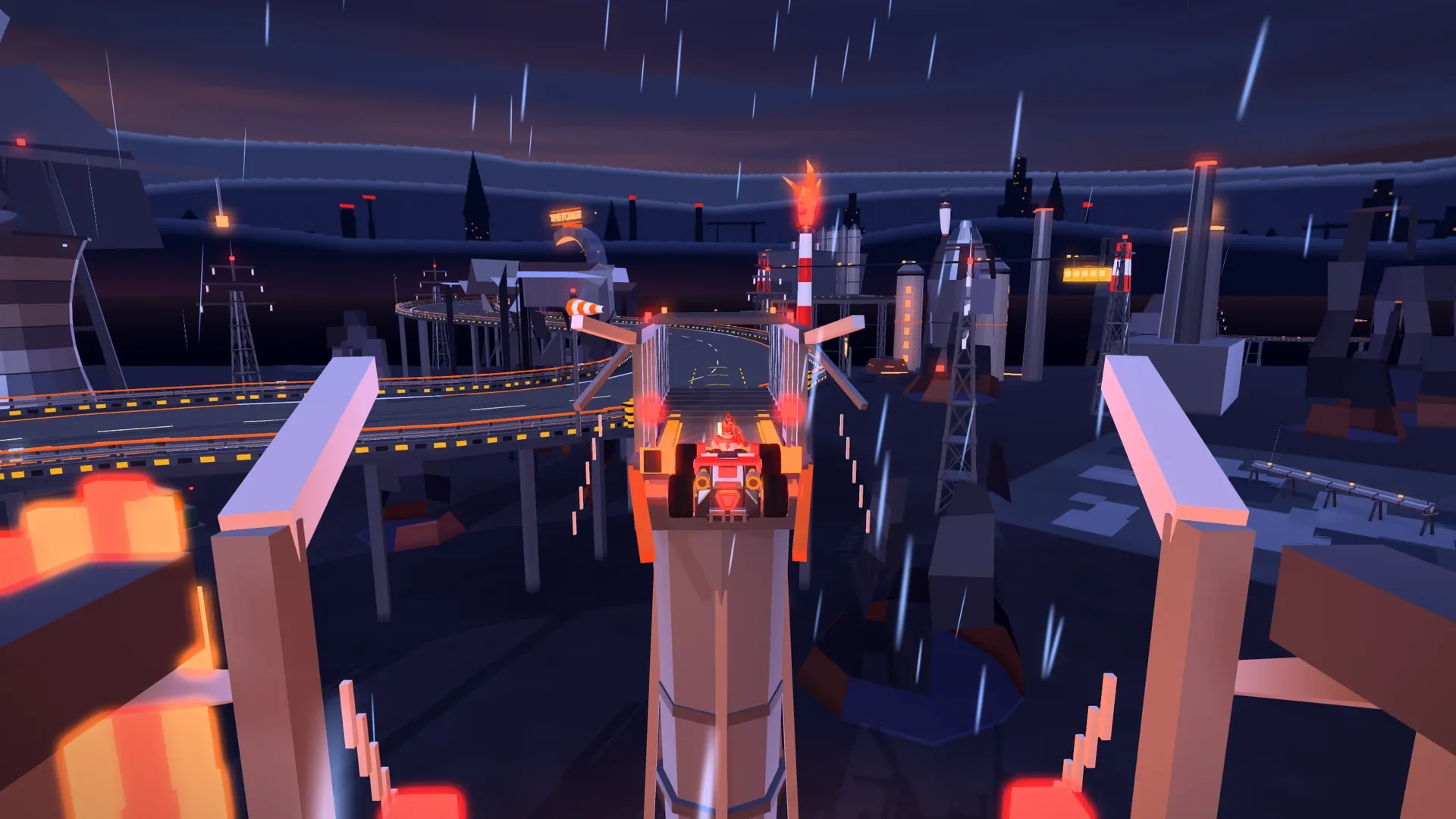
The Broken Bridge and The Hammer are still big arcade racing moments, but they now feel more like parts of Thunderforge rather than special objects placed there just because the track needed a jump.
Making the environment react
Thunderforge also became a good place to push the environment a little further.
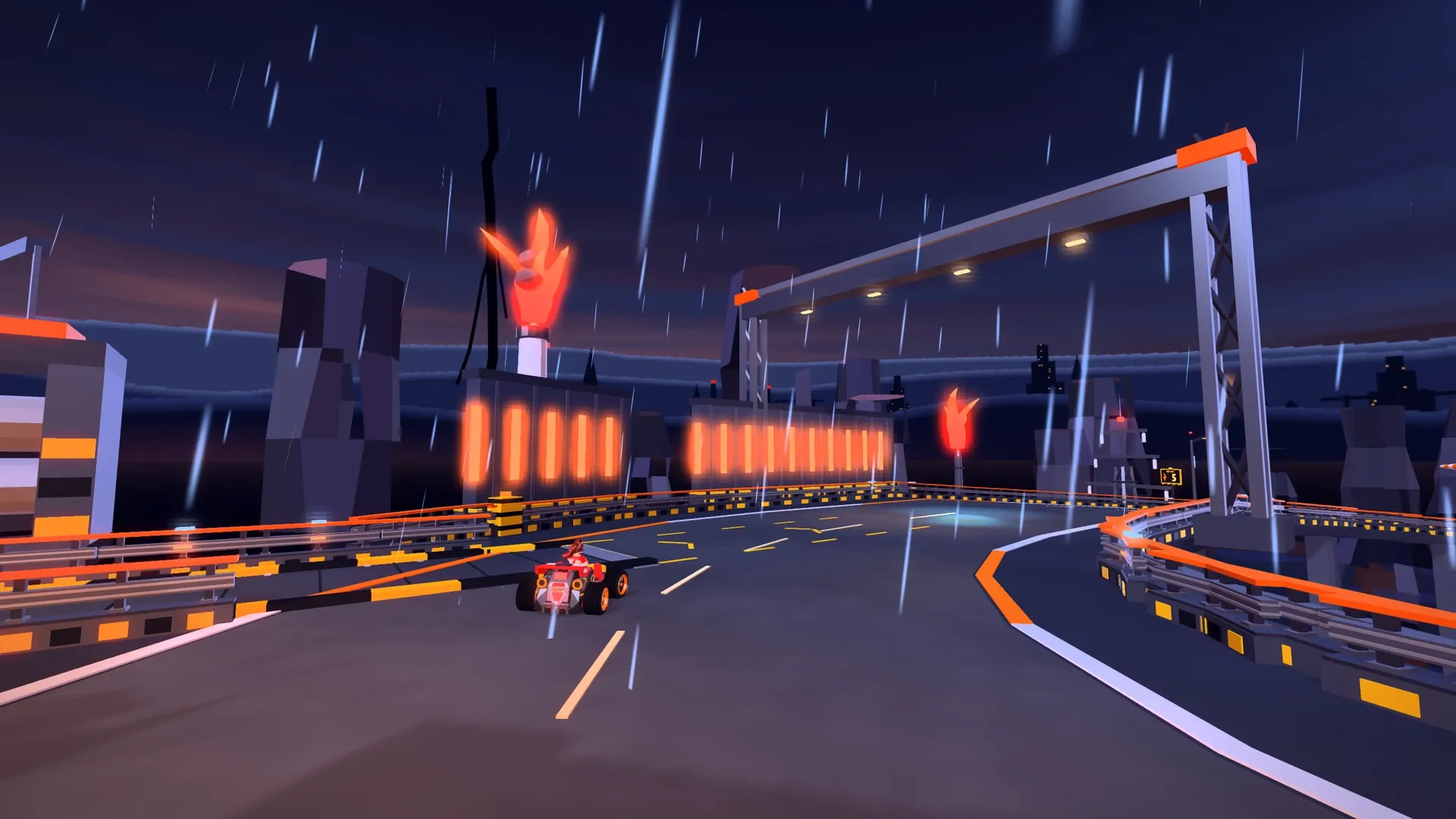
The forge now has much more movement around the player.
There are machines working in the background, steam, sparks, moving industrial elements and more activity around the pit and trackside areas.
Animating everything would be distracting and expensive for little gain. I chose a few larger pieces of motion that you can notice while racing.
The goal was simply to make the world feel like it carries on beyond the racing line.
That is something I want more of throughout Riff Racers.
The track should not feel like a road floating inside a decorated level.
It should feel like part of a place.
Hazards, but not random punishment
Thunderforge also gave me an excuse to experiment a bit more with hazards.
Things like steam vents and industrial machinery fit the setting naturally.
But I am trying to stay away from traps that just punish you randomly.
If something can interfere with the race, I want the player to be able to read it.
A warning light, an animation, a sound cue, a repeated timing pattern — something that lets you understand what is about to happen.
A hazard might catch you the first time, but its warning should help you avoid it on the next lap.
That feels much fairer, especially in a racing game where losing half a second can already matter.
The boring stuff that matters
Much of the final Thunderforge pass went into collision work.
There were objects close to the track that looked completely solid but did not actually have proper collision.
That immediately breaks the illusion when you hit them and the kart simply passes through.
So I went over the track again and checked barriers, machinery, pillars, tunnel walls, trackside objects and the pit area.
If something looks like you should hit it, you should hit it.
That sounds obvious, but it is exactly the kind of thing that is easy to miss while concentrating on the bigger picture.
I also checked for floating props, clipping, awkward road seams, overlapping geometry and flickering surfaces.
None of those things make a good screenshot on their own, but fixing them is what makes the final result stop feeling unfinished.
The pit lane
The pit lane also got another pass.
Pit stops are something I want to build on properly later, so right now the important part is making sure each track already has a believable foundation for them.
For Thunderforge that meant improving the entry and exit, making the lane feel like it naturally branches away from the main straight and giving the service area a bit more life.
I want it to look useful even before all of the final pit-stop gameplay exists.
That way, when that system arrives later, I am not trying to force it into spaces that were never designed for it.
Building with the actual game running
One thing that has changed quite a bit in my workflow recently is how closely I can work against the running Defold project.
Riff Racers is now on Defold 1.14.0, and I have also added a Defold MCP setup to the project.
That means a lot more of the work can follow a proper loop:
build something, run it, inspect it, find the problem, fix it, run it again.
For a track like Thunderforge that matters a lot.
A collider can look perfectly sensible in a file and still feel wrong when the kart hits it at speed.
A ramp can look fine from above and still have an awkward landing.
A shortcut can seem perfectly logical until you actually approach it at racing speed.
The running game always gets the final vote.
Thunderforge's identity
Every Riff Racers track needs one or two things that immediately tell you where you are.
For Thunderforge, the main landmarks are the forge itself, the Broken Bridge jump and the storm over the mountains.
That contrast between cold blue lightning and the warm furnace glow ended up giving the track a very strong identity.
And it is probably one of the reasons I kept polishing it longer than planned.
Once the atmosphere started working, all the little rough edges became much easier to notice.
So I kept going.
Four tracks down
Thunderforge is now the fourth track to reach this stage.
There is still plenty left to do across Riff Racers, but getting another track to the point where I can stop looking at it as a collection of systems and start seeing it as an actual place is a really satisfying milestone.
The next step is the same one I have been looking forward to after every finished track:
driving it far too many times and seeing what breaks.
That part somehow never gets old.
For now though, Thunderforge is ready.
And yes, jumping a kart across a broken industrial bridge during a thunderstorm is every bit as fun as I hoped it would be.